Industry references put hydraulic hose life at 1,000–2,000 working hours — and Gulf conditions sit at the short end, because rubber compounds age with heat and UV even while the machine is parked. A burst hose is oil on the ground at best; injected into skin or sprayed onto a turbo at worst. The inspection takes minutes.
The Monthly Walk-Around (Machine Off, Pressure Released)
Look and feel along every accessible hose for:
Replace on Condition AND on Calendar
Condition triggers above are absolute. But hoses that pass inspection still age internally — smart Saudi fleets batch-replace critical high-pressure lines (pump outlets, breaker circuits) every 2 years or ~2,000 hours, timed with other maintenance, instead of donating a day of downtime to each surprise burst.
Spec the Replacement Right
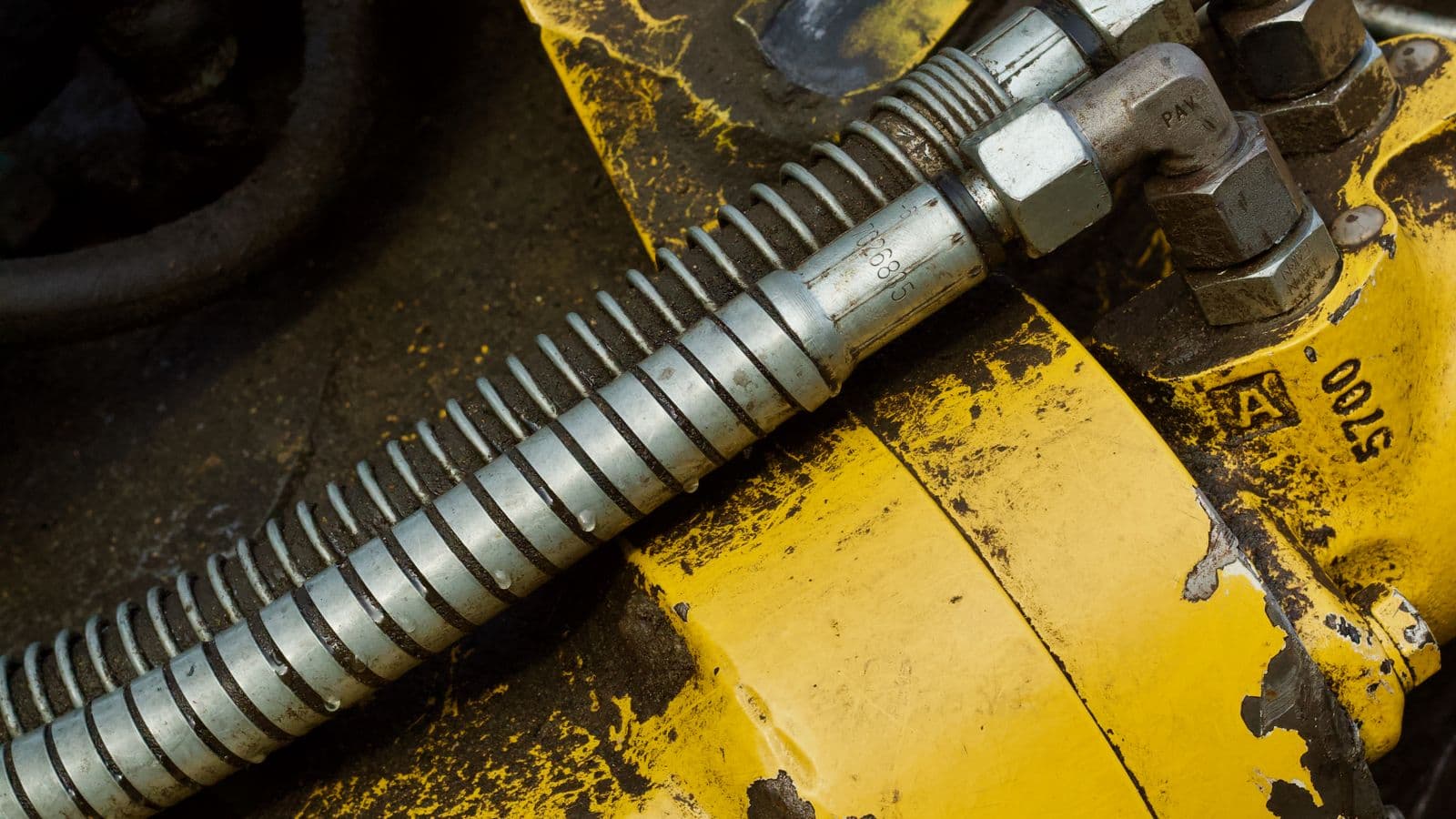
Read the old hose's lay line: dash size (-8, -12, -16...), pressure standard (SAE 100R2AT, 4SP, 4SH...), and length flange-to-flange. Match or exceed the pressure rating; never downgrade because "it was available". Note fitting types and orientation angles — a photo of both ends beside a tape measure lets a supplier duplicate the assembly exactly. In Saudi heat, choosing high-temperature-rated covers repays itself.
Routing Discipline When Installing
Route with bend radius respected (tight bends fatigue wire), leave 3–5% slack for pressure elongation, clamp away from edges and heat, and never let hoses rub each other — two hoses sawing together fail as a pair.
HESP supplies hydraulic hose assemblies, fittings and protective sleeves for all common equipment in Saudi Arabia — send photos and measurements, or the machine model and circuit, and we will build and deliver the exact assembly fast.