The quick coupler turned the excavator from a digging machine into a tool carrier — bucket to breaker to grapple in minutes, no hammer and pins ceremony. But every attachment now hangs from one mechanical joint that wears, and connects through hydraulic interfaces that ingest dirt for a living. Coupler care is a discipline with safety stakes: a dropped breaker is a headline, not a repair.
Excavator Couplers: The Wear Map
Whether pin-grabber or dedicated-style, the wear points repeat:
The inspection rule that serious Saudi fleets run: coupler checked visually at every attachment change, dimensionally every 500 hours, and any looseness investigated before the next breaker shift — hammer duty multiplies coupler wear three to five times over digging.
Skid Steer and Loader Interfaces
The universal skid steer plate and loader coupler groups wear at the wedges, bosses, and lever/locking mechanisms. A worn plate lets attachments rock, which peens the interface and accelerates wear on both machine and every attachment it carries. Build-up welding and wedge replacement are cheap; replacing curled plates on ten attachments is not.
Hydraulic Quick-Disconnects: The Contamination Gate
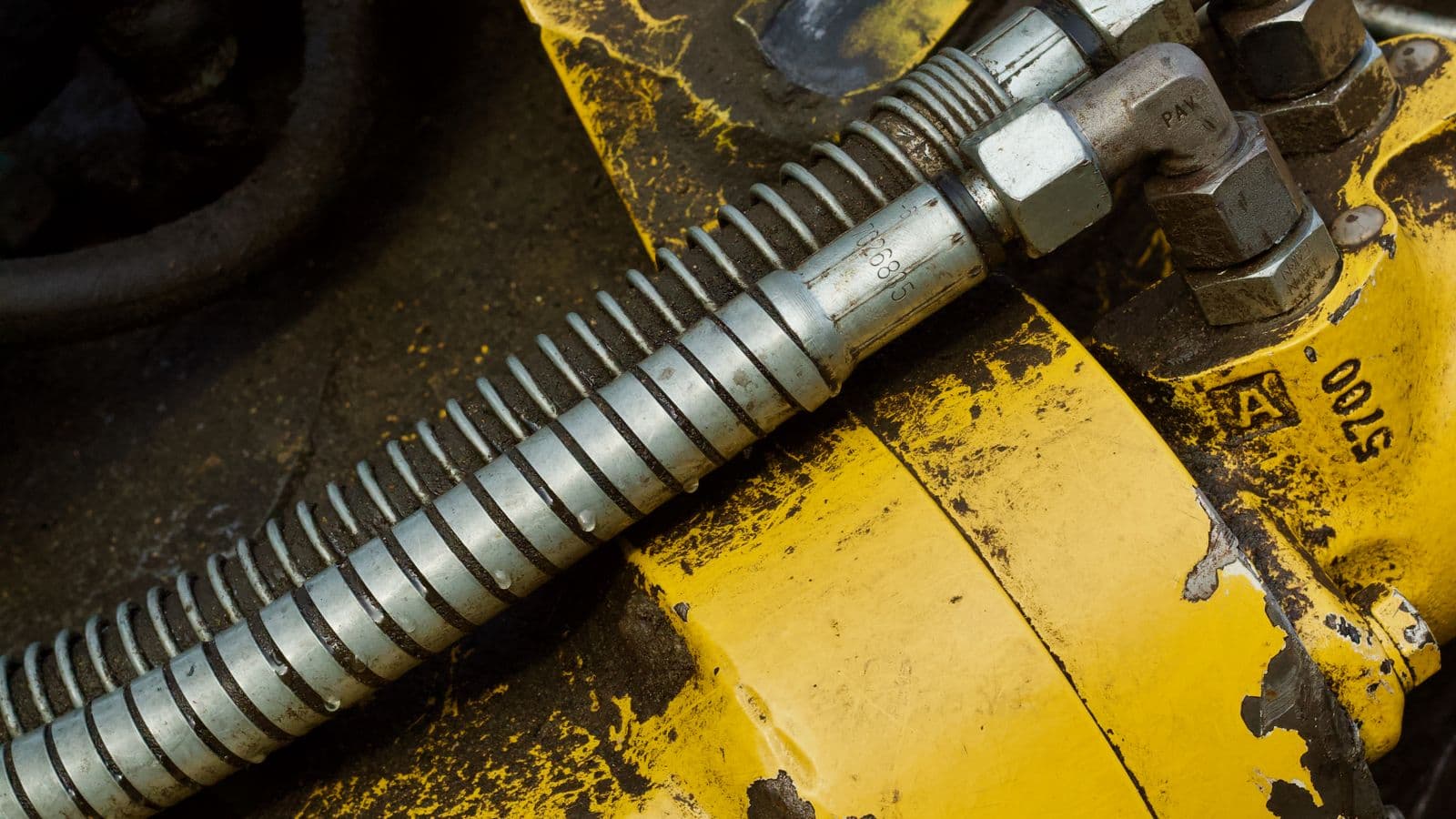
Every attachment swap opens the hydraulic system to the environment. The couplings themselves — poppet or flat-face — are wear parts: leaking valves, damaged faces, and torn dust caps. Flat-face designs carry visibly less dirt into the system and dominate modern spec for a reason. The habits that protect the whole machine: wipe both faces before connection every time, keep caps on open couplings (stock caps in boxes — they vanish), relieve trapped pressure before connecting (thermal pressure rise in a parked attachment line makes couplings fight back), and replace weeping couplers promptly — each drip is dirt's doorway in.
Case Drain and Special Lines
Breakers and some attachments need case-drain or dedicated return lines with their own couplings. Wrong-line connection is a classic seal-destroyer on hammers — color-code or tag the circuits and train every operator who swaps tools.
HESP stocks coupler wear parts, locking components, springs and cylinders, hydraulic quick-disconnects (flat-face and poppet), caps and seals for the coupler brands common in Saudi Arabia — plus the safety-system components no fleet should run without. Send your coupler model and attachment list; we will map the interface parts in one pass.