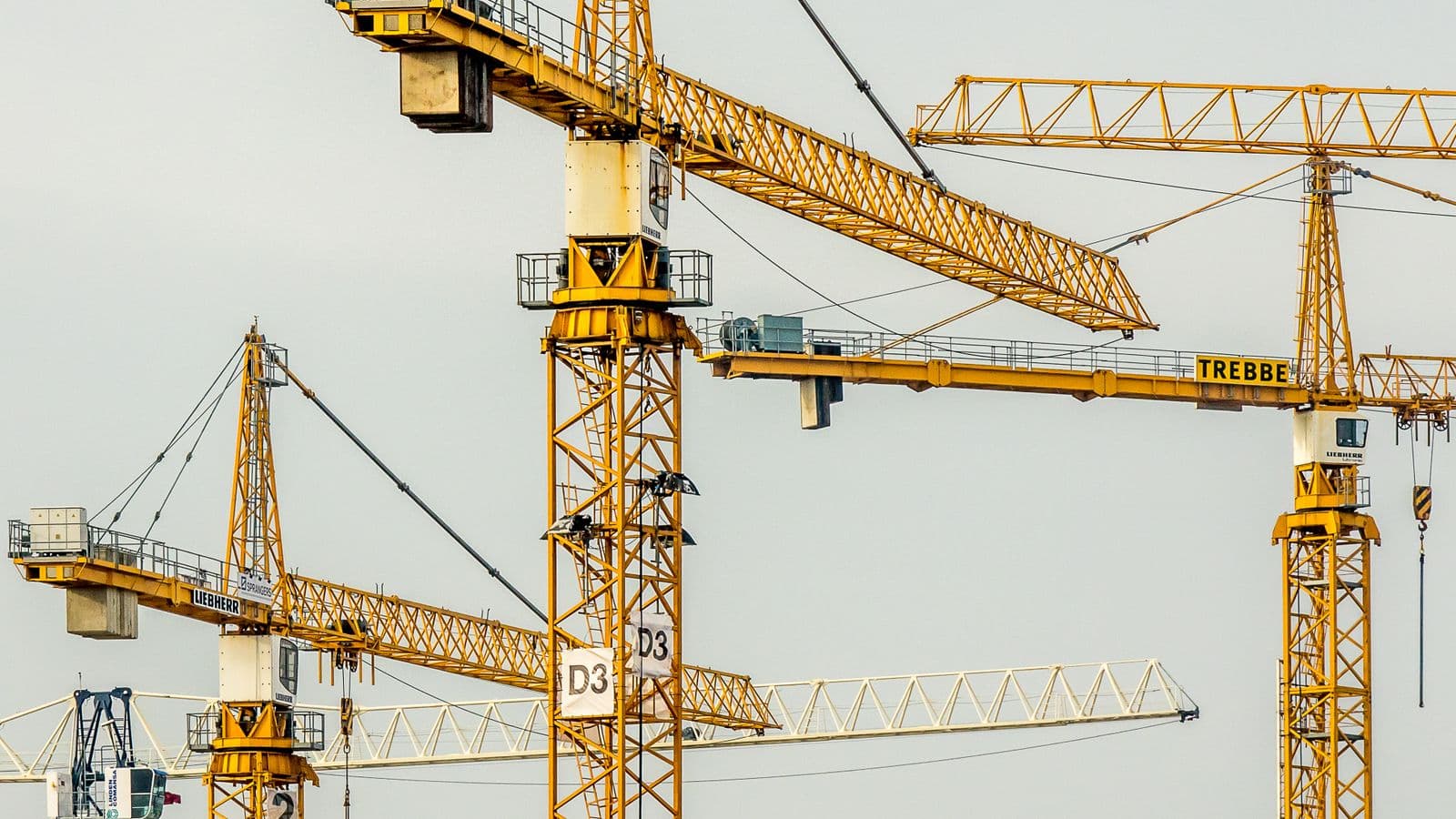
Count the tower cranes on any Riyadh or Jeddah horizon and you are counting the construction economy itself. Potain, Liebherr, Comansa, Zoomlion, and XCMG units stand over every major site — and unlike mobile equipment, a tower crane's parts story is governed by inspection regimes, certification paperwork, and the simple fact that everything on it works at height.
Ropes: The Scheduled Consumable
Hoist, trolley, and luffing ropes are replace-on-condition items with inspection criteria written into standards — broken wire counts per lay length, diameter reduction, corrosion, kinking:
Electrical: Where Tower Cranes Actually Fail
Day to day, tower cranes stop for electrical reasons more than mechanical ones:
Stock the model-specific limit switches and a spare anemometer per crane fleet; they are small parts with outsized downtime.
Mechanical Systems
Slewing ring bolts (torque-checked on schedule, replaced per criteria — never reused casually), slew ring grease and pinion wear, hoist gearbox oil and brake pads/discs, and trolley wheels and rollers make up the mechanical wear list. Brake components deserve special respect: hoist brakes are the line between a load held and a load dropped.
Documentation Is Part of the Part
Saudi site inspections — internal HSE and third-party — expect certificates for ropes, hooks, and load-path components, plus maintenance records naming fitted part numbers. The supplier's job includes the paperwork; buy parts that arrive inspection-ready.
HESP supplies tower crane parts across Saudi Arabia — certified ropes cut to length, limit switches, inverter and brake components, slewing parts, and sheaves for Potain, Liebherr, Comansa, and Chinese-brand cranes — documentation included as standard. Send the crane model, serial, and inspection date; we will work backwards from it.